Published: May 20, 2026
Have you ever felt like an impostor at work?
Statistically, the answer is probably an astounding yes, because 70% of successful people have felt this way at some point — including your employees.
The truth is, employees with no self-esteem and an innate belief they’re frauds become paralyzed when faced with decision-making and require a bit of assistance to shake off the symptoms of imposter syndrome.
This is where you, the managers, come in, with the right tools, words, and empathy.
But first, let’s take a look at what imposter syndrome is.
- Imposter syndrome is the feeling of self-doubt that individuals experience about their work accomplishments.
- There are 5 types of impostor syndrome: the Perfectionist, the Expert, the Soloist, the Natural Genius, and the Superhuman.
- The Win Journal is an efficient method to release stress and anxiety related to impostor syndrome.
- 70% of successful people have had imposter syndrome at some point in their lives.
What is imposter syndrome?
Imposter syndrome is the feeling of self-doubt that individuals experience about their work accomplishments. They believe they don’t deserve their jobs or success, or that they can never meet others’ expectations. As a result, they feel like impostors or frauds at the workplace.
Also known as imposter phenomenon or imposter experience, imposter syndrome at work is quite common. In fact, a Journal of General Internal Medicine imposter syndrome study discovered that, while the numbers can vary, imposter syndrome affects as many as 82% of people.
According to Carolyn Herfurth, a co-founder of the Impostor Syndrome Institute, whom we had the chance to speak to about the subject, despite the term “syndrome”, imposter syndrome is not a diagnosable disorder of any kind:

“It’s this belief that millions of people worldwide share — that they are not as talented, intelligent, capable, or qualified as others think they are. And, the fascinating thing about it is that these feelings exist despite all the evidence of our accomplishments — diplomas, awards, business growth, promotion.”
How do you know your employees have imposter syndrome?
Here are some examples of typical behavior of a person having imposter syndrome:
- Procrastinating
- Feeling like a fraud
- Asking for help being hard
- Believing one is not worthy of praise
- Overworking (staying late or going to work early)
- Blaming and criticizing oneself for minor mistakes (while feeling as if others have everything under control)
- Rejecting new opportunities or avoiding challenges at work
Still not sure if your employees suffer from the imposter phenomenon?
The author, psychologist, and co-creator of the term impostor syndrome, Dr. Pauline Rose Clance, created an impostor test which helps determine whether someone has it or not, and to what extent.
Of course, to recognize the symptoms right away, it’s also of tremendous help to know about the different types of impostor syndrome.
The 5 types of impostor syndrome
Global Thought Leader on Impostor Syndrome, Dr. Valerie Young, has defined 5 main types of impostor syndrome.
The Perfectionist
The Perfectionist sets a high standard and pays plenty of attention to detail. If the outcome is not 100% successful, they go over and over the mistake they’ve made, unable to let it go.
As a consequence, the Perfectionists are rarely satisfied with how they did something, regardless of the actual quality of the work done.
The Expert
The Expert constantly feels like they’re one certificate away from knowing just about everything. However, this never happens, so they tend to overprepare for tasks.
Employees with this type of impostor syndrome constantly feel as if they’ll be perceived as incompetent. Despite working in their field and acquiring specialized skills for years, the Experts feel they are incapable of handling their job.
The Soloist
As the name suggests, the Soloist believes they should do every task on their own. Asking for help is unacceptable out of fear that others will think it’s a sign of weakness.
This do-it-myself mindset often leads to undertaking too many tasks and eventually causing burnout.
The Natural Genius
The Natural Genius feels like an imposter every time they cannot master something new right away.
The employees with this type of impostor syndrome usually grew up praised as smart, which led to them believing that acquiring new skills was easy. For them, only finishing a task quickly and successfully is a sign of one’s competence — and everything else is failure.
The Superhuman
The Superhuman needs to excel in as many roles as possible, be it at work or in private life. Their self-worth is directly tied to how busy they are during the day.
The employees experiencing this type of imposter syndrome feel guilty when they need to rest and take breaks. Just like Perfectionists, they’ll try to be perfect at their role at work, but also a perfect friend, parent, and partner.
What can leaders do to support their employees in combating imposter syndrome?
Let’s now take a look at what managers can do to show support for their workers experiencing this syndrome.
Educate yourself and your team
Herfurth encourages managers to be proactive and educate their teams about imposter syndrome. It’s also important for managers to educate themselves on the subject.
What happens when managers have no clue that their employees are experiencing imposter syndrome? Well, such managers can’t reassure the employees that they are doing a good job. And, employees who don’t get any reassurance often end up with burnout, procrastination, or being completely dissatisfied with themselves at work, which in turn hinders their productivity.
So, being familiar with the signs of imposter syndrome, such as always working long hours or avoiding challenges, can help.
Create a mistake-tolerant environment
When mistakes are consistently frowned upon, there’s an atmosphere of fear, which is never good for productivity.
Next time one of your employees makes a mistake, try not to call them out in a judgmental way — rather discuss the ways in which the mistake can be undone.
In this way, productivity will not be driven by fear, and errors will be something everyone can learn from and move past.
Provide regular feedback
Regular feedback, both positive and constructive, is an effective method to prevent and deal with impostor syndrome.
Feedback is especially beneficial for those who work from home, since they don’t have “watercooler” moments with other employees and managers.
For instance, transparent communication in 1:1 meetings and providing performance data to back up the praise can go a long way in preventing your employees from ever developing impostor syndrome.
Believe in your employees
Founder and Executive Coach, Amy Clark, points out that team leads should let employees know that they have confidence in them.

“Showing your employees examples of when they have been successful will reinforce strengths and show employees that they are valued members of the team. Finally, placing them in situations where they shine will generate a feeling of accomplishment and excitement about their contributions.“
Amy elaborates that by offering employees the space to practice materials ahead of time, managers can help them overcome feelings of doubt and build confidence.
Advise your employees to keep a win journal
If your employees aren’t aware of the term win journal, inform them it’s a simple way to keep track of all the moments when they received praise, were proud of themselves, or accomplished something big.
This can be a Google Docs document containing screenshots, diplomas, and citations of empowering messages they’ve received. There’s no right or wrong way to keep this type of journal — yet constantly reminding oneself of successful achievements can boost confidence and minimize self-doubt. Additionally, according to a Forbes article, keeping a win journal reduces stress and anxiety and improves clarity and focus.
Promote transparency within the team
Organizational Psychologist, Executive Coach, and Author, Dr. Gena Cox, emphasizes that managers should not and cannot do anything about a team member’s internal feelings. However, here’s what Gena recommends team leaders do — treat all team members the same way:

“Managers must make sure that they do not create inequities by choosing favorites and make pay, promotion, and other decisions fairly. Everyone who is a logical candidate gets a chance to be considered for opportunities.”
Dr. Cox also suggests that team leaders should allocate their resources and time equitably while providing stretch assignments and coaching. This helps build team members’ confidence to tackle new opportunities.
Encourage open communication
When experiencing imposter syndrome, some people may find it difficult to speak freely during team meetings, out of fear of coming across as incompetent at their job.
To let their employees speak up, and thus fight the impostor phenomenon, managers should focus on improving team collaboration and communication.
Here are some ways to do so:
- Make sure nobody interrupts their coworkers while speaking,
- Give all team members equal time to share their thoughts during meetings, and
- Create an environment where team members can discuss mistakes, find ways to fix them, and celebrate examples of good work.
This way, employees will not only feel more comfortable expressing their thoughts and ideas, but also feel more valued.
Further reading:
Help your employees stay focused at work by encouraging them to read this article:
Give your employees the right tools to measure their success
When your employees feel busy, but don’t actually know how productive they are, it’s useful to have objective data to provide the right perspective.
This can easily be done by using time tracking tools. Sometimes, the only thing needed for your employees to realize how much they’ve achieved is to log different tasks and see how much they’ve done at the end of the day.
For instance, Clockify is a simple, straightforward tool that millions of people already use to track their tasks and time effectively.

Further reading:
Becoming productive is a path toward building confidence and getting out of the imposter mindset. Check out how time tracking helps with enhancing productivity:
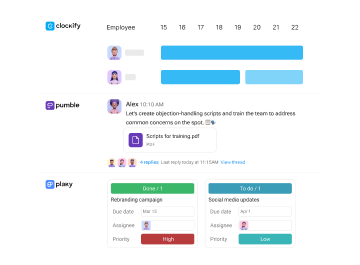
Elevate productivity with CAKE.com
Combine time tracking, team communication, and project management to boost your organization’s productivity — with the CAKE.com Suite.
How common is imposter syndrome in the workplace?
Studies by Gail Matthews, KPMG, and Kajabi presented on the Imposter Syndrome Institute website show that as many as 70% of successful people reported feeling like impostors at some point in their lives.
When it comes to gender, a study conducted by Walr found that 56% of the participants said: “men and women are suffering equally from imposter syndrome”. Other impostor syndrome studies confirm that impostor syndrome is equally found in men and in women.
These numbers imply that having employees (regardless of their gender) without impostor syndrome is highly unlikely. That’s why learning to recognize and help your employees overcome it is extremely important.
Help your team become confident
Feeling like an imposter at the very beginning of a new job or position is somewhat expected. But, even then, managers are the ones who have the power to reduce the self-doubting impact this syndrome has on everyone.
So, always stay on alert for those who aren’t relaxed enough to give their maximum effort without it affecting their mental health. Consistency combined with the right approach will boost your team’s confidence in the long run.
How we reviewed this post: Our writers & editors monitor the posts and update them when new information becomes available, to keep them fresh and relevant.